
This news article featured in issue no.18 in CHSP’s November 2022 newsletter
In this article you will learn of a confined space fatality, how hazardous working in water tanks can be and what is a confined space.
What took place
In December 2013, Robert Geach 54, died by drowning after he fell into a water tank. He had been attempting to fulfil his workplace duties.
The accident took place in a sand filtration tank at a water treatment plant in Falmouth Cornwall. He was working for South West Water at the time. He was attempting to fix a fault by unblocking a filter on the inside of the tank. Robert had to lean in to reach the filter and leaned in too far. He fell through the hole and drowned. He was eventually found face down in over six feet of water.
Cause
Robert was working at height with no fall protection in place to prevent a fall into the tank of water.
The lone working alarm system had been set off but there was a slow response rate. Responders didn’t find Mr Geach for four and a half hours.
South West Water had apparently been warned on a number of occasions of the fall from height hazard. They were also informed control measures needed putting in place. The warnings had not been acted upon up until this incident.
The risk assessment was also found not to be sufficient for the job.
Outcome
Judge Robert Linford of Truro Crown Court, found South West Water guilty of breaching the Health and Safety At Work Act 1974. This was for failure to provide a safe place to work. South West Water was fined a whopping £1.8 million, excluding costs.
Rectification
South West Water were reported to have rectified their health and safety systems within a week after the incident. They had reduced the size of the access point installed to prevent falls, introduced 2 man working policy and a revised lone working device designed to detect a man down with GPS tracker. Prevention is better then a cure.
What is a confined space?
A confined space is an enclosed or substantially enclosed space that has a foreseeable risk to workers including fire, explosion, fumes etc.
What makes a water tank a confined space?
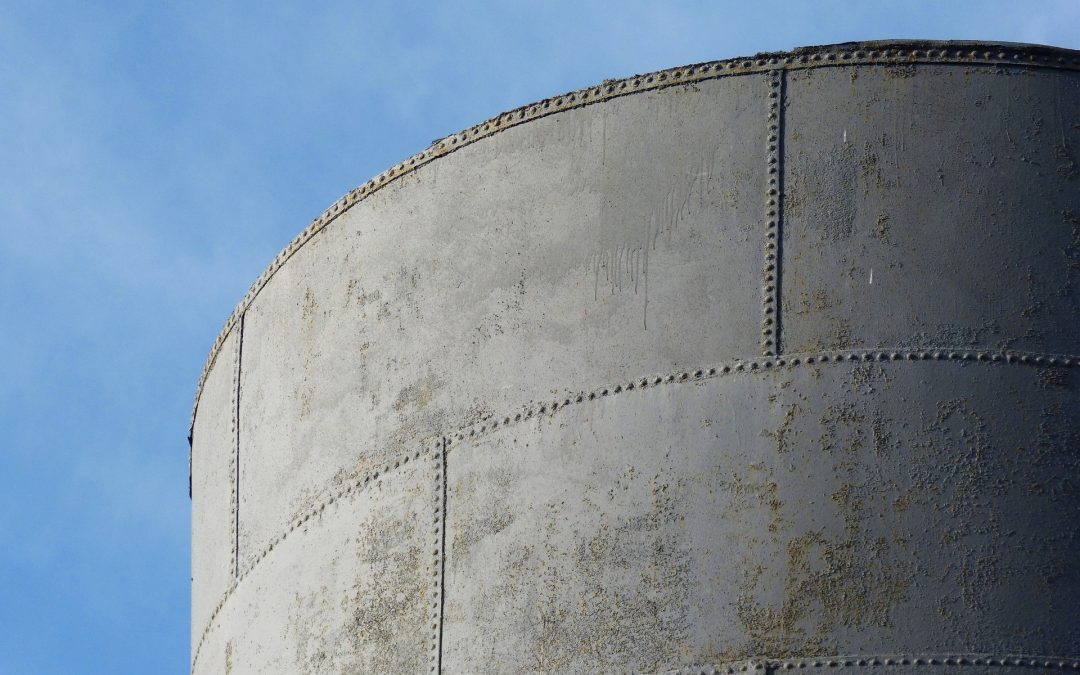
Water tanks are confined spaces because they have limited access combined with the possibility of oxygen depletion. Oxygen depletion could be due to chlorine fumes above the water level (if the water hasn’t been drained), the water itself as a worker is at risk of being submerged and drowning. Fumes sitting at the bottom of the tank if the water has been drained from chlorine. With water in the tank fumes can accumulate just above water level. Rust from the metal inside the tank also uses up oxygen. This is why it is important to have effective control measures in place and an effective rescue plan in place.
Risk assessments need to be prepared that are specific to the hazards present at each particular site. These are commonly referred to as site specific risk assessments. Each site will have differences to consider. There are other hazards associated with water tanks, these include:
- Falls from height – as tanks very often do not have guardrails or anchorage points to prevent a fall,
- Lone working – consider the likely delayed response time in the event of an emergency,
- The access egress method can pose a hazard for example in built ladders or self supplied are available or MEWPs,
- If power tools are planned to be used in a tank with atmospheric risks then this would increase the risk. Explosions can be caused from a combination of airborne dust particles, oxygen and heat, sparks generated from the use of the power tool,
- Insufficient rescue plan – It has been estimated that 60% of confined space fatalities involve the rescuer.
Risk Assessment – Factors to consider
Around 15 people are killed in confined space accidents in the UK each year. The hierarchy of controls must be used as a method to eliminate the risks where possible and if not then to put measures in place to reduce the risk of an accident taking place.
Confined spaces and access
The first thing to consider is, is entry into a tank necessary. If it isn’t maybe work can be planned remote from the tank using an access platform such as an aluminium tower, scaffold or a MEWP. Otherwise, restrict access for partial entry. Where there is an alternative safer means to complete the work required use it.
If there isn’t then consider how can the hazard within a confined space be removed and assessed prior to a necessary entry. Consider atmospheric testing using purpose built devices to measure the fumes and oxygen levels in the tank down to the level where the worker will be required prior to entry.
Another to thing to think about is what would you do about the fumes if they are detected to be to high for entry or work to take place? Consider time allowance for ventilation, periodic monitoring, respiratory protective equipment or if worse comes to worse rescheduling.
Can the water be drained prior to entry to prevent drowning?
Lone working
If you haven’t been able to eliminate the atmospheric hazards and others, how will a rescue plan be performed if worse comes to worse, without a look out / watchman? A rescue plan in confined spaces and work at height situations needs to be in place without any reliance on the emergency services to complete some or all of a rescue. So consider if lone working is safe and legal. If you can justify it is, which can only be assured if the definition of a confined space is not satisfied, what lone working procedures are in place?
Falls from height
Again think is work at height absolutely necessary, if so can the time be minimised?, how can a fall from height be prevented? This often requires a combination of safety measures such as working from working platforms guardrails, fall restraint and arrest harness lanyard systems and anchor points.
Use of power tools
Can safer alternatives be used that reduce the chances of heat generation such as hand tools.
Rescue Plan
What is the safest way to perform a rescue? Consider different scenarios such as the method of rescue when they are conscious, the rescuee is unconscious and / or injured.
Next Steps
CHSP offer Working in Confined Spaces Training, click on the following link to access your Free Trial.
For further advice and support make your enquiries to:
Email: info@chsponline.co.uk
Tel: 07908 174408
Frequently Asked Questions About Confined Space Safety
What qualifies as a confined space under UK law?
Under the Confined Spaces Regulations 1997, a confined space is any enclosed or substantially enclosed space where there is a foreseeable risk of serious injury from hazardous substances or dangerous conditions. This includes water tanks, storage vessels, silos, sewers, ducts, and underground chambers. The key factors are limited access/egress and the presence of hazards such as lack of oxygen, toxic gases, fire, explosion, drowning, or entrapment.
Do I need a permit to work in a confined space?
Yes, most confined space work in the UK requires a formal permit-to-work system under the Confined Spaces Regulations 1997. The permit ensures a thorough risk assessment has been completed, atmospheric testing conducted, control measures implemented, rescue equipment available, and emergency procedures established. Only competent, trained personnel should authorise entry into confined spaces.
What are the main hazards when working in water tanks?
Water tank hazards include: (1) Drowning if water is present or cannot be drained, (2) Oxygen depletion from chlorine fumes or rust consuming oxygen, (3) Falls from height due to lack of guardrails or anchor points, (4) Toxic gas accumulation (chlorine, hydrogen sulphide), (5) Slips and trips on wet surfaces, (6) Hypothermia from cold water exposure, and (7) Delayed rescue due to access difficulties. Each water tank requires a site-specific risk assessment.
How often should confined space risk assessments be reviewed?
Confined space risk assessments should be reviewed: (1) Before each entry if conditions vary, (2) At least annually for routine operations, (3) After any incident or near-miss, (4) When work methods change, (5) When new equipment is introduced, and (6) If atmospheric monitoring reveals unexpected hazards. The Confined Spaces Regulations 1997 require assessments to remain current and reflect actual site conditions.
What training is legally required for confined space work?
Under the Confined Spaces Regulations 1997 and Health and Safety at Work Act 1974, all workers entering confined spaces must receive adequate training covering: (1) Hazard identification and risk assessment, (2) Safe entry and exit procedures, (3) Use of atmospheric testing equipment, (4) Proper use of respiratory protective equipment and safety harnesses, (5) Emergency rescue procedures, and (6) Communication systems. Training must be refreshed regularly (typically every 3 years), and records must be maintained.
Can I work alone in a confined space?
Lone working in confined spaces is strongly discouraged and generally prohibited under the Confined Spaces Regulations 1997. A trained watchperson/attendant must remain outside to: (1) monitor the worker continuously, (2) maintain communication, (3) perform atmospheric testing, (4) raise the alarm immediately if problems occur, and (5) coordinate rescue operations. Approximately 60% of confined space fatalities involve would-be rescuers, highlighting the critical importance of proper procedures.
What rescue equipment is required for confined space work?
Confined space rescue equipment requirements include: (1) Retrieval systems (tripods, winches, rescue harnesses), (2) Breathing apparatus or airline respirators, (3) Gas detectors and atmospheric monitors, (4) Communication equipment (two-way radios), (5) Lighting (intrinsically safe), (6) First aid equipment, and (7) Decontamination facilities if applicable. All rescue equipment must be tested before each use, and rescue drills should be conducted regularly. Never rely solely on emergency services for confined space rescue.
How much does a confined space risk assessment cost?
Confined space risk assessment costs typically range from £350 to £1,500+, depending on: (1) Site complexity and number of confined spaces, (2) Atmospheric testing requirements, (3) Whether rescue plan development is included, and (4) Travel distance. CHSP offers transparent, fixed-fee pricing for confined space assessments across Leicestershire, Derbyshire, and Nottinghamshire.